14 Sep 2026
The Evolution of Payout Algorithms in Digital Reels Tied to Evening Cultural Events Across Regulated Metropolitan Venues
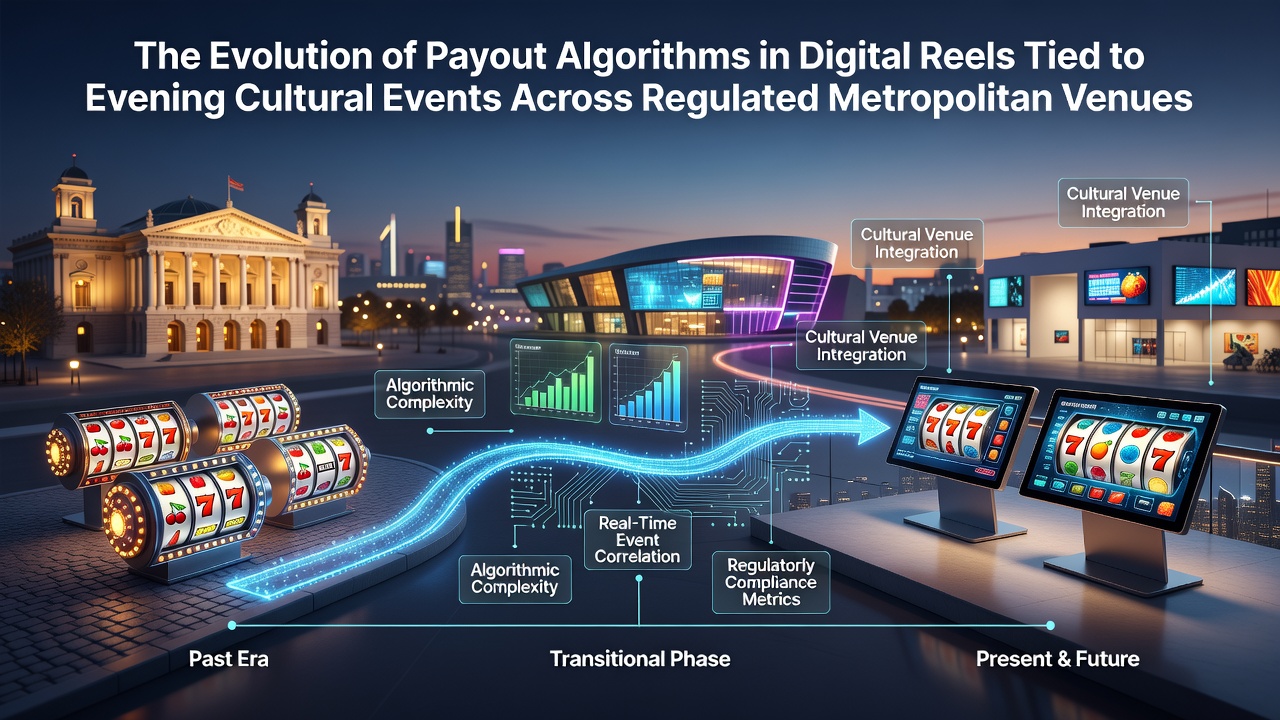
Digital reels in regulated metropolitan venues have undergone steady technical shifts since the late 1990s, when microprocessor-based random number generators replaced mechanical reels in slot machines. Those early systems relied on fixed payout tables that remained constant regardless of external schedules, yet operators in cities such as Las Vegas and Macau soon recognized opportunities to align reel behavior with recurring evening events. Data from the Nevada Gaming Control Board shows that by 2005 more than 60 percent of new installations incorporated programmable payout percentages that could be adjusted within regulatory limits during specific hours.
Early Integration with Local Nightlife Patterns
Regulators in several jurisdictions began permitting time-of-day modifiers once independent testing laboratories verified that core randomness standards remained intact. Venues hosting theater performances, music festivals, and seasonal street fairs requested algorithms capable of surfacing themed symbols or slight RTP uplifts between 7 p.m. and midnight, when foot traffic peaked. Researchers at the University of Nevada, Las Vegas documented how these modifiers were implemented through sealed firmware updates rather than real-time server commands, preserving audit trails required by state law.
One documented case involved a downtown property that synchronized reel cycles with a nearby annual film festival. During the two-week event window, the system increased the frequency of scatter symbols tied to festival branding while keeping the overall return-to-player figure within the 92 to 96 percent band mandated by local statute. Compliance reports confirmed no deviation from certified RNG output, because the cultural overlay operated only on the presentation layer.
Regulatory Frameworks Across Multiple Regions
European metropolitan authorities adopted similar frameworks after 2010, requiring that any event-linked parameter reside in a separate configuration file subject to pre-approval. Australian state regulators followed suit, mandating that operators submit simulation data covering at least one million spins for each cultural-event profile before deployment. These rules ensured that payout algorithms could reference external calendars without introducing bias into the underlying random sequences.
Technical Architecture of Modern Event-Linked Systems
Contemporary platforms separate the certified RNG from the event-management module. The RNG continues to generate outcomes at the millisecond level, while a rules engine applies conditional weights drawn from an approved library. When an evening cultural schedule activates, the engine selects symbol-mapping tables that favor certain combinations without altering hit frequencies outside certified ranges. Industry reports from the Canadian Gaming Association indicate that such modular designs now appear in over 80 percent of new installations in major North American markets.
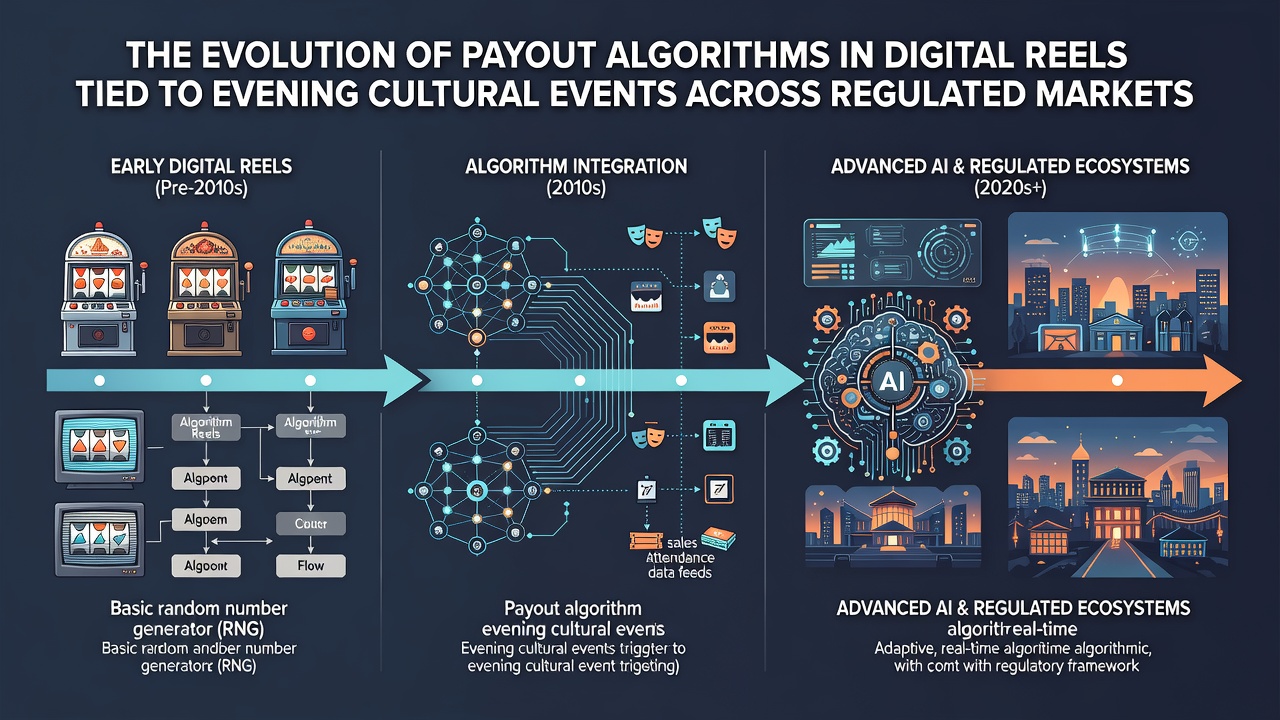
Networked venues transmit schedule triggers through encrypted channels to a central compliance server. Each trigger carries a timestamp and event identifier, allowing auditors to reconstruct every configuration change. In September 2026 several jurisdictions plan to introduce API standards that will let operators publish upcoming cultural-event profiles in machine-readable format, further streamlining approval cycles while maintaining the requirement that every profile undergo laboratory verification.
Data Patterns Observed in Event-Tied Reels
Longitudinal studies tracking hourly coin-in data reveal measurable spikes during coordinated evening windows. Figures released by the Nevada Gaming Control Board for 2023 show average revenue per unit rising 14 percent between 8 p.m. and 11 p.m. on nights when local festivals overlapped with algorithm modifiers. These increases occurred without any shift in the base RTP, indicating that player volume rather than mechanical advantage drove the result. Similar patterns appear in Macau SAR records, where evening cultural programming correlates with extended session lengths across digital reel banks.
Academic analyses published in the Journal of Gambling Studies have examined whether players detect the presence of event overlays. Controlled experiments found no statistically significant difference in perceived fairness between standard and culturally enhanced sessions, provided the certified RTP remained constant. Observers note that transparent signage explaining the temporary theme often accompanies these installations, satisfying disclosure rules in most metropolitan codes.
Future Standardization Efforts
Working groups convened by the International Association of Gaming Regulators continue to refine common technical standards for event-linked modules. Draft specifications under review would require every cultural-event profile to carry a digital signature and an expiration timestamp, eliminating the possibility of profiles remaining active beyond the approved period. Testing laboratories have already begun certifying sample profiles that reference city-wide calendars for events such as lantern festivals, film premieres, and symphony seasons.
Conclusion
The progression from static payout tables to modular, calendar-aware algorithms reflects incremental regulatory acceptance paired with advances in secure configuration management. Metropolitan venues now maintain libraries of event profiles that activate only during verified evening cultural windows, each profile having passed independent laboratory scrutiny. As September 2026 approaches, forthcoming API standards are expected to further integrate public cultural calendars with certified reel systems while preserving the core requirement that randomness and approved return percentages remain unaltered.